Enhancing Drum Handling Safety: Common Risks and Effective Solutions

Manual handling of drums includes lifting, lowering, pushing, pulling and moving industrial drums of all sizes. Drum handling is part of the job in manufacturing and agricultural industries as well as in garages, workshops and in the distribution of paint, petroleum and chemical products. Drum handling training is necessary to reduce the risk of workplace injury. Identifying problems and moving to correct them is the primary goal of workplace safety training.
In this post, we are going to discuss the current landscape, risks and recommendations surrounding incorrect drum handling and ways to improve drum handling safety during daily operations.
Poor drum handling practices:
1. Manually moving drums by hand, churning them from ‘A’ to ‘B’ by balancing the load on the bottom edge of the drum; the loads experienced can exceed 90kg resulting in strain to the body, poor posture also increases the chance of injury;
2. Pulling or lifting drums manually from (or onto) a pallet using excessive force, there is the potential for strain injuries and finger entrapment;
3. Dropping drums into the horizontal position by pushing or tipping them over, this uncontrolled action risks injury, a spillage or spark creation in an ATEX area;
4. Two-person drum tipping with one person holding each side of a heavy drum;
5. Decanting drums/loading racking with a forklift by lifting them up in the horizontal orientation, drums can slide off the ends of the forks causing damage or injury.
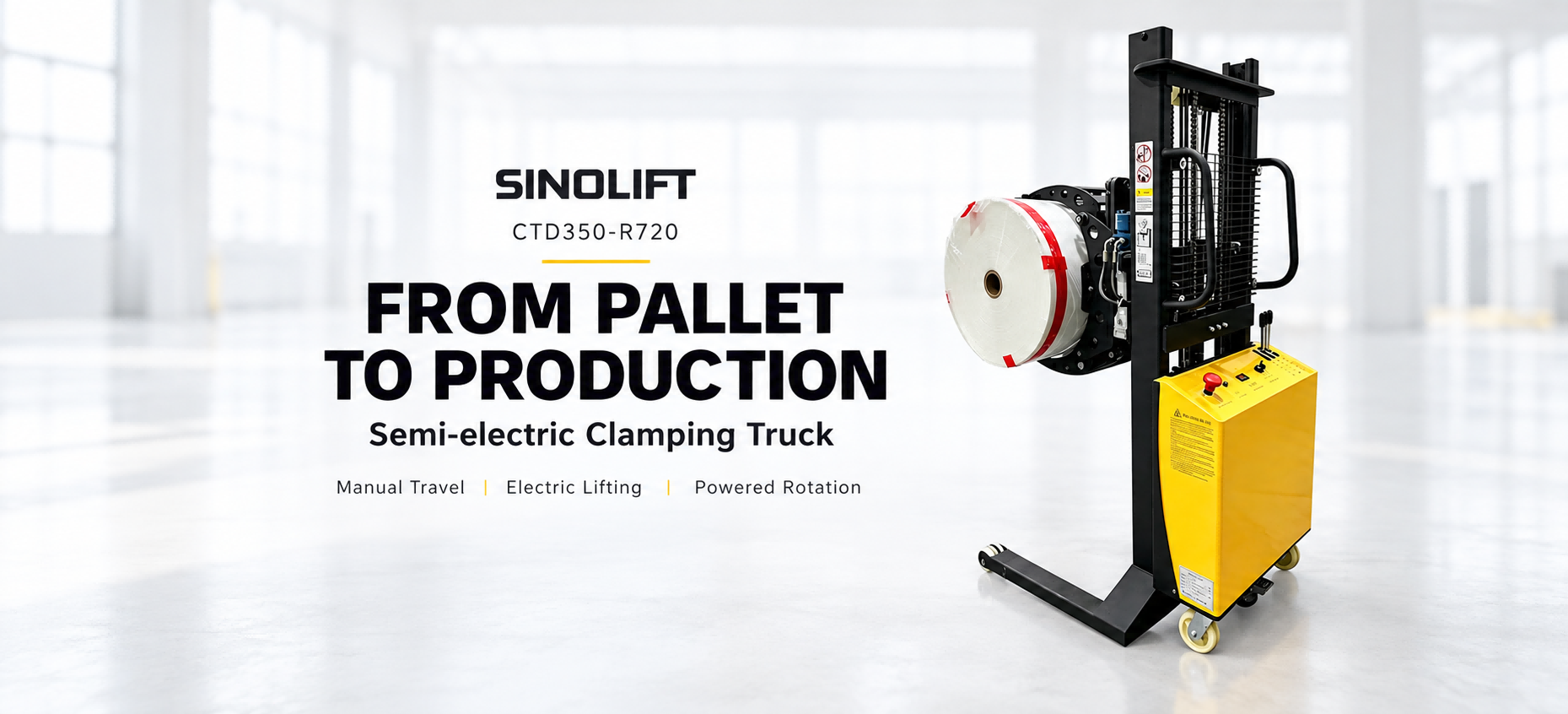
SINOLIFT Reel Handling
Roll Handling Equipment To Deal With Packaging
Related Article