How Do You Grip a Roll Securely While Protecting Its Surface?
How Do You Grip a Roll Securely While Protecting Its Surface?
A roll can reach the production line and still arrive in the wrong condition. Scuffed outer layers, damaged edges or visible pressure marks may mean additional inspection before the material is ready for use. For printing and packaging operations, the condition of the roll at delivery deserves as much attention as the journey itself.
This creates an important question when choosing handling equipment: how can a clamp hold a roll securely while treating its surface with care? The answer begins with matching the gripping arrangement to the material, then considering how the roll will be lifted, moved and positioned.

Start with the Roll Itself
A cylindrical shape does not tell the whole story. Paper rolls and film rolls can differ in surface finish, winding condition, dimensions and protective wrapping. Even when two rolls have a similar weight, they should not automatically be treated as the same handling application.
Before selecting a clamping truck, establish what the clamp will actually touch. Will it contact the material directly or grip an outer protective layer? Are surface marks acceptable, or does the next production stage require an unmarked finish? These questions give the equipment supplier a more useful starting point than weight alone.

Secure Gripping Depends on More Than Force
Clamping force and the contact surface need to work together. Insufficient grip can allow movement, while excessive clamping can contribute to deformation. Simply increasing force is therefore not a complete solution to a handling problem.
The shape, material and condition of the contact pads also matter. A contact surface suited to the roll can help provide the friction needed for secure handling without unnecessary clamping force. Pad selection and the appropriate clamping settings should be confirmed for the actual application, following the equipment manufacturer’s requirements. Reference: Cascade Corporation
Surface Protection Continues During Positioning
The initial grip is only one part of the assessment. Consider what happens next: does the roll need to be raised, turned or presented to a machine in a different orientation? How much clearance is available around the load during those movements?
A useful equipment review follows the intended operation through to placement. It considers the roll’s dimensions, the space around the workstation and the required final orientation. This helps establish whether the proposed truck and clamp can carry out the task within their approved operating limits.

Where the SINOLIFT CDD500-R720 Series Fits
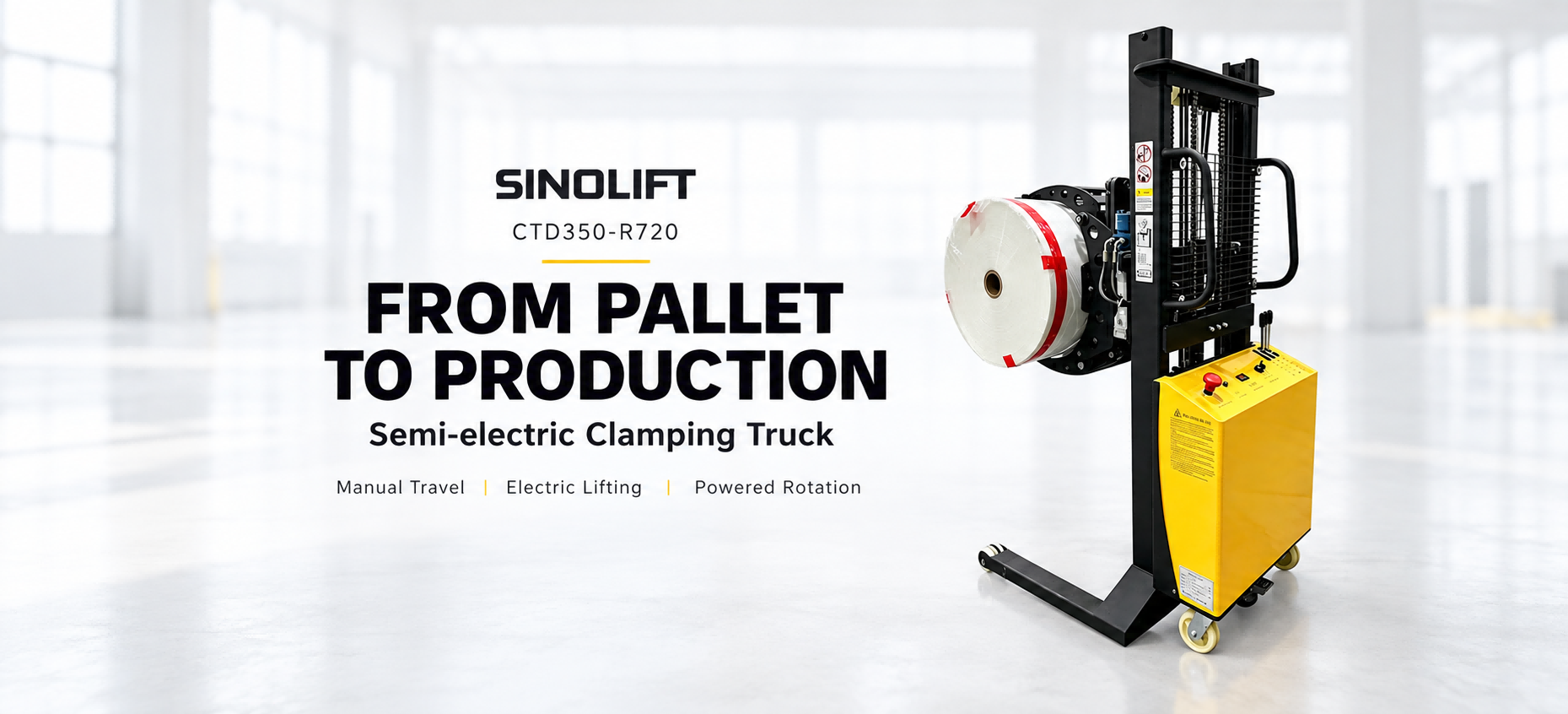
The SINOLIFT CDD500-2.0-R720 / CDD500-3.0-R720 Stand-on Electric Clamping Truck combines electric traveling, lifting, clamping and rotating functions. Designed for cylindrical materials, the series supports roll transport, stacking, loading, unloading and positioning applications in printing and packaging environments.

Its 360° rotating clamp provides flexibility when adjusting roll orientation. Bringing rotation and lifting together on the truck allows these functions to be considered as part of one handling solution, with suitability assessed against the roll and the receiving workstation.
For frequent journeys between storage and production areas, the stand-on platform provides a practical operating position. The anti-slip, shock-absorbing platform supports operator comfort, while the integrated handle brings travel, lifting, horn and emergency stop controls together.
For surface-sensitive materials, the final clamp configuration remains an essential part of selection. The contact arrangement and clamping requirements should be reviewed with SINOLIFT for the intended rolls; electric operation alone does not establish compatibility with every material.
Define What a Successful Result Looks Like
When discussing a roll handling application, share the material type, minimum and maximum roll dimensions, weight range, wrapping condition and required lifting and positioning movements. Photos of the rolls and receiving equipment can help explain details that a specification table may miss.
Where surface appearance is critical, agree on acceptance criteria and arrange an application assessment or representative handling trial before final selection. A successful result should address both secure handling and the condition in which the roll reaches its next process.
Looking for a clamping truck for your paper or film rolls? Contact SINOLIFT with your roll specifications and application details to discuss whether the CDD500-R720 Series is a suitable match.
CONTACT SINOLIFT
To discuss your application with SINOLIFT, share the roll weight, diameter, material and required handling sequence, together with photos of the pickup and delivery points.
Visit www.sinoliftchina.com to learn more.
WhatsApp/Tel:
+86 189 1727 6010
Email:
global@sinolift.com
Website:
www.sinoliftchina.com
www.sinolift.com

From Pallet to Production with the SINOLIFT CTD350-R720
Related Article