


PV Manual Hydraulic Roll Handling Stacker for Paper & Film Rolls
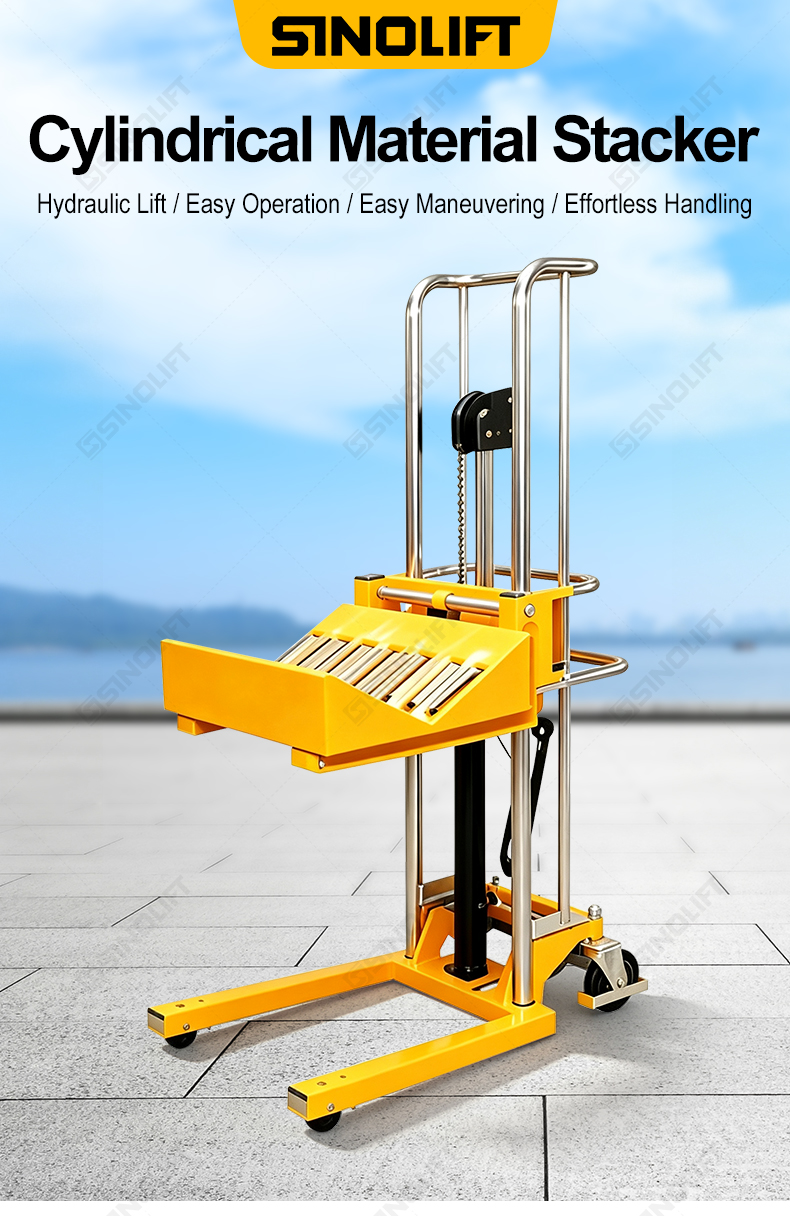
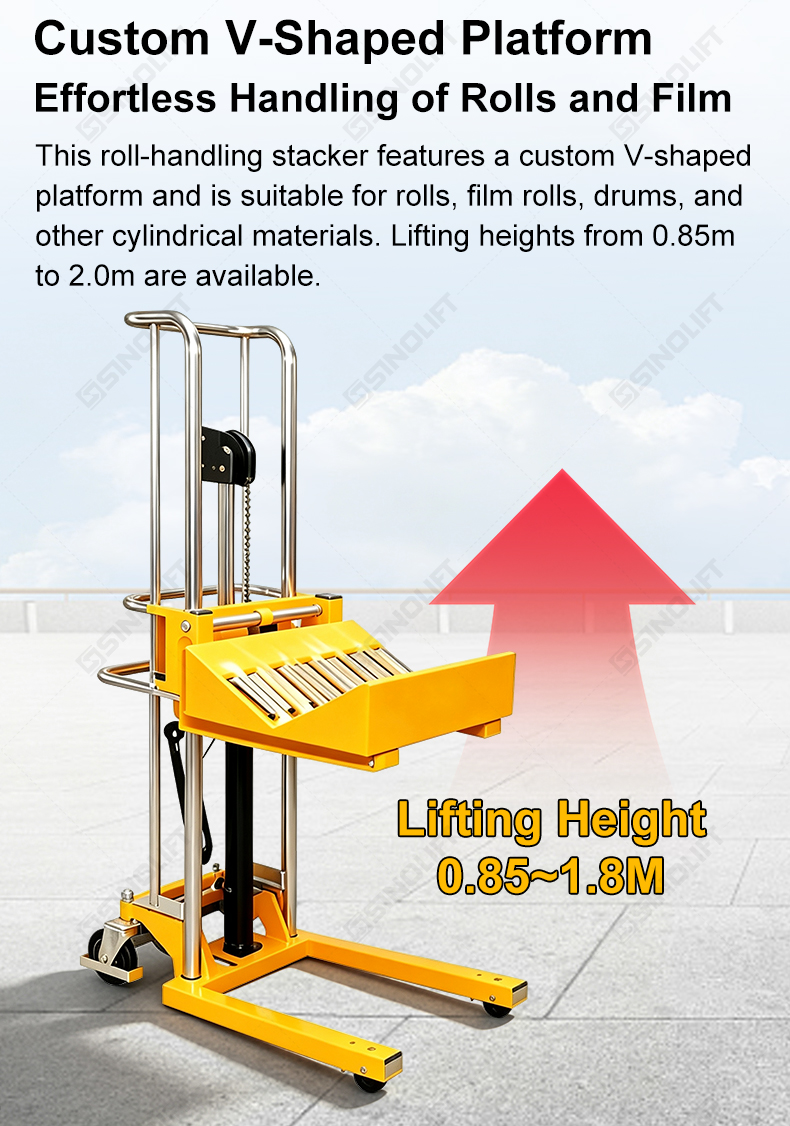
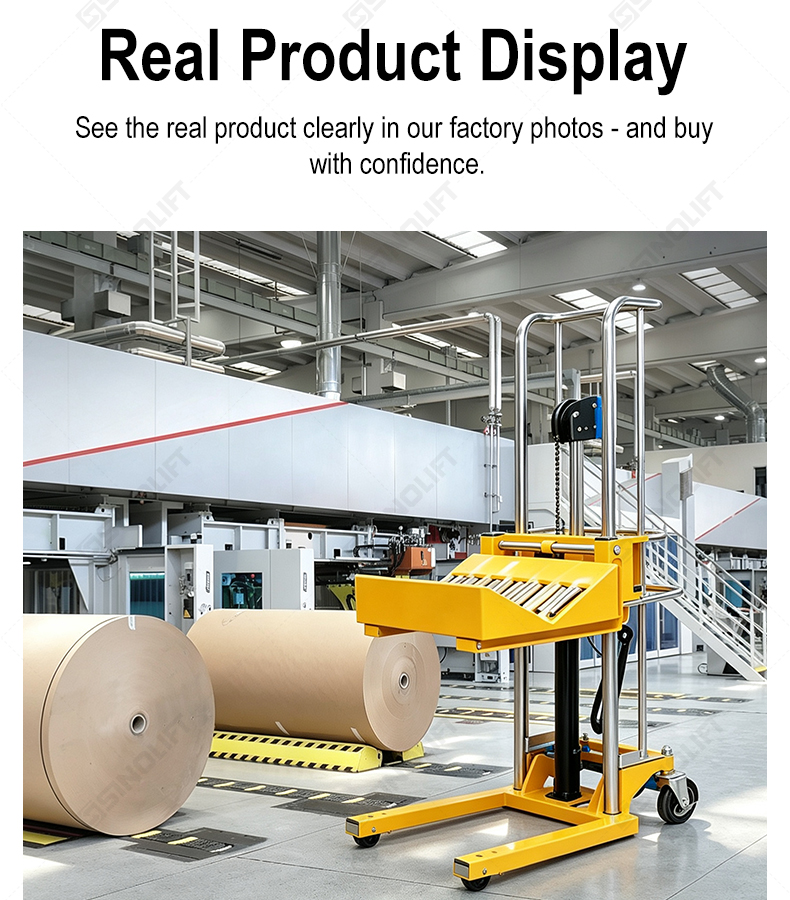
The PV Manual Roll Handling Stacker is designed to lift, move and position film rolls, paper rolls, drums and other cylindrical materials that are difficult to handle safely by hand. Its custom V-shaped roller platform keeps the load centered, while the foot-pedal hydraulic lift and reinforced mast provide smooth, stable handling. It is a practical custom solution for printing, packaging, paper converting, plastics manufacturing and warehouse operations.
Features Overview
Purpose-Built for Cylindrical Loads
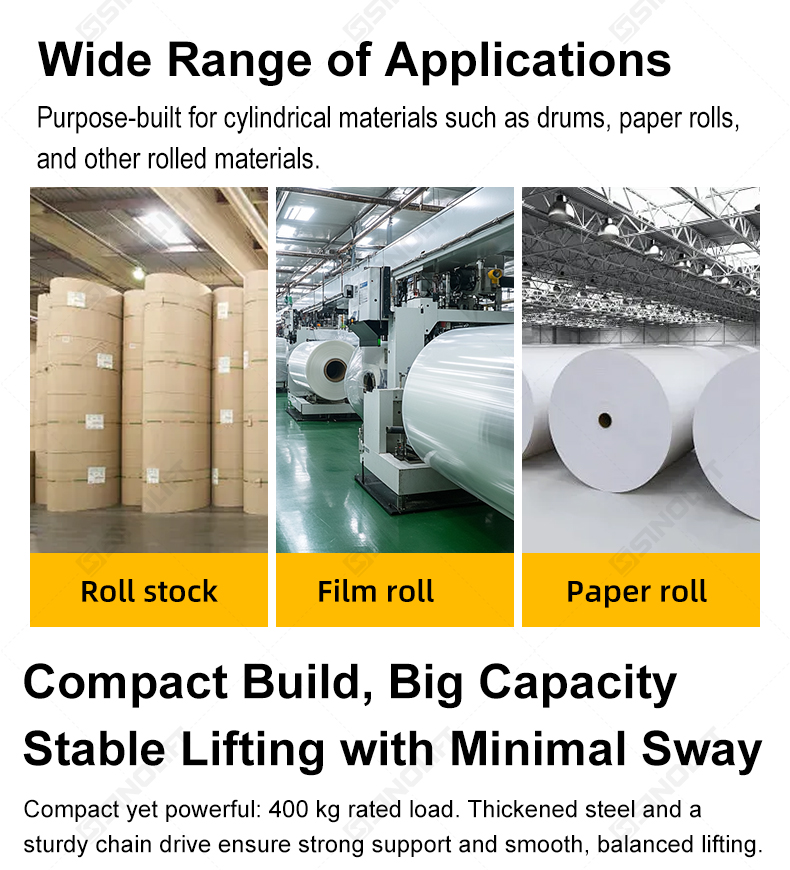
Designed for the safer handling of film rolls, paper rolls, drums and other cylindrical materials.
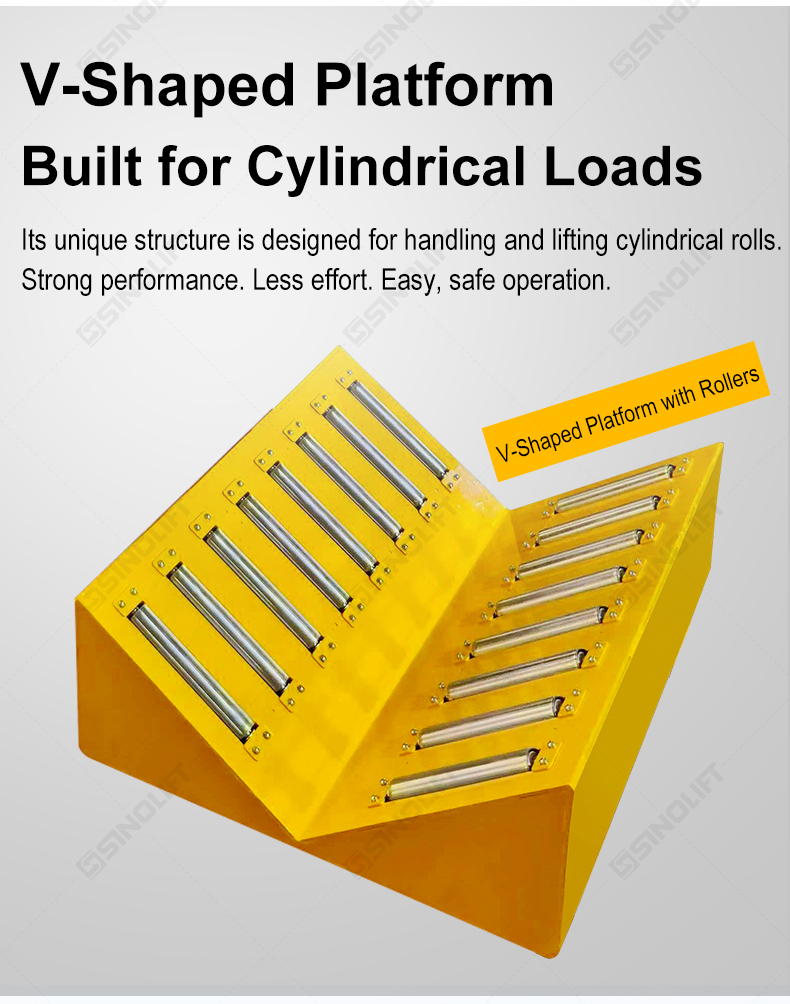
Custom V-Shaped Roller Platform
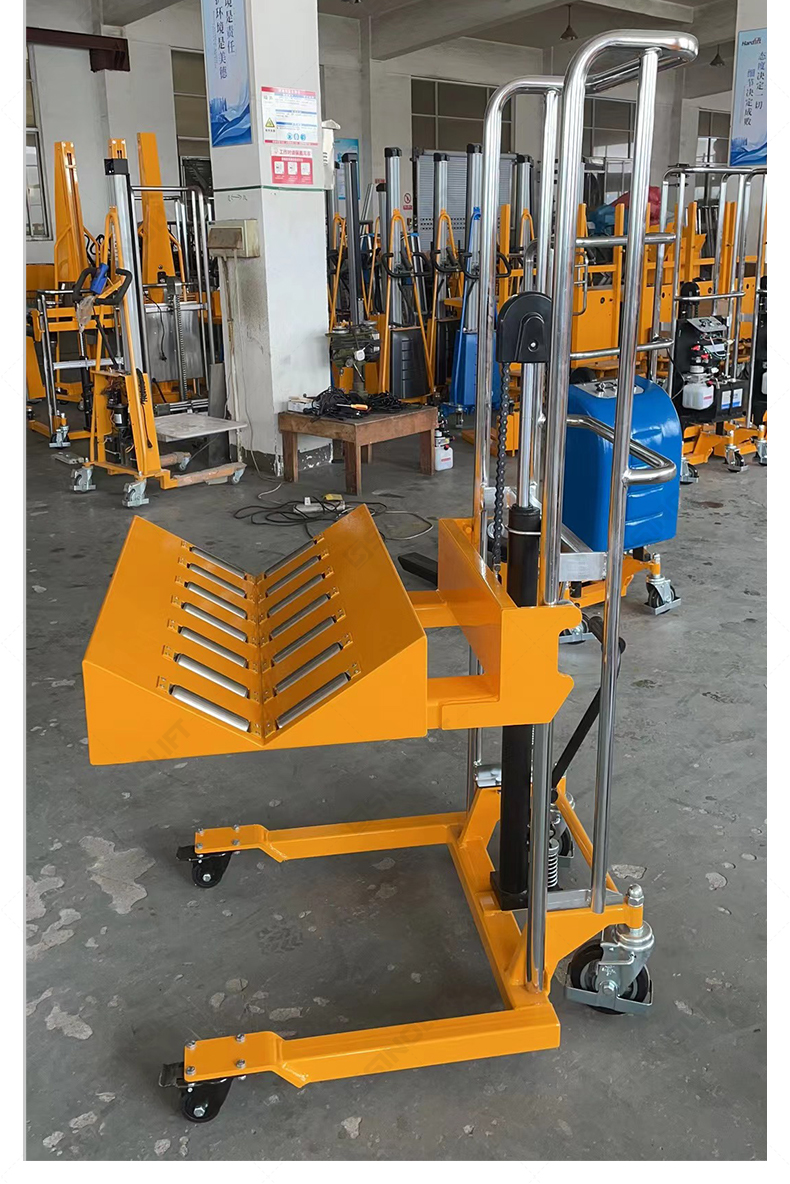
The V-shaped platform helps center the load, while integrated rollers make roll placement and adjustment easier.
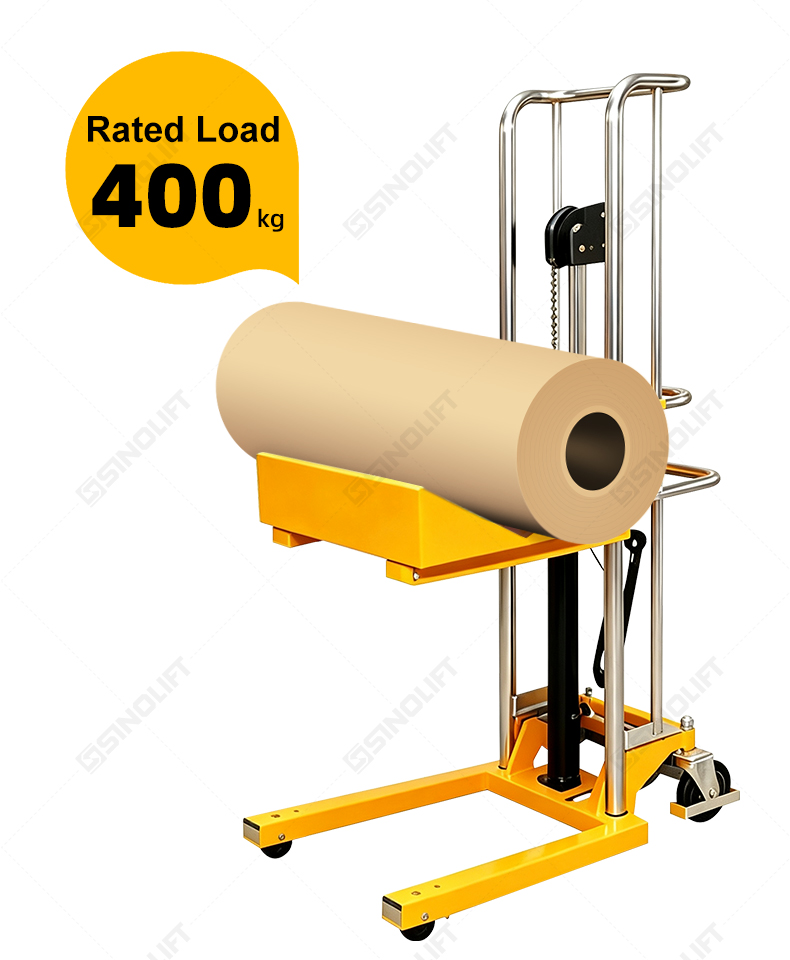
400 kg Rated Capacity
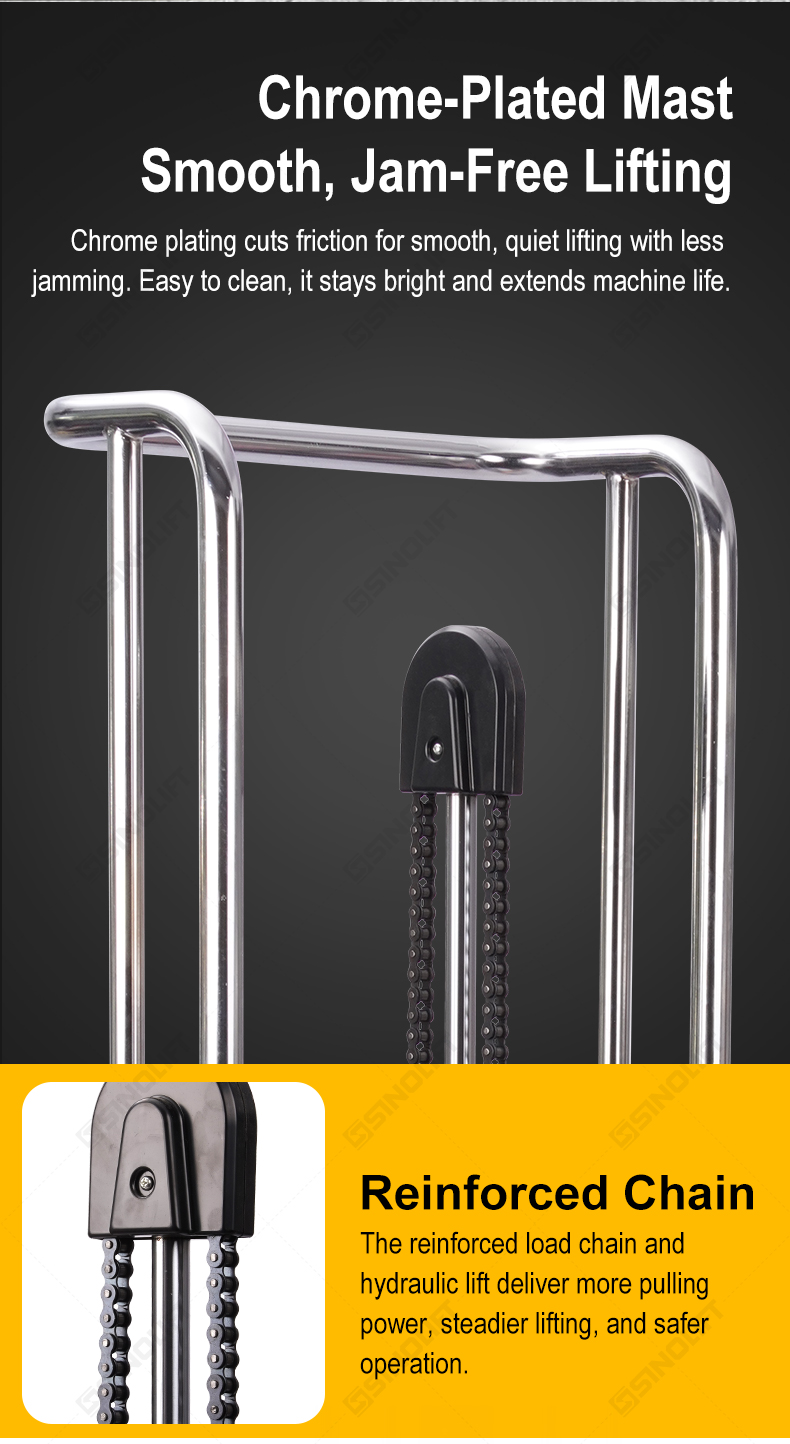
A thickened steel structure and reinforced load chain provide reliable support for loads weighing up to 400 kg.
Manual Hydraulic Lifting
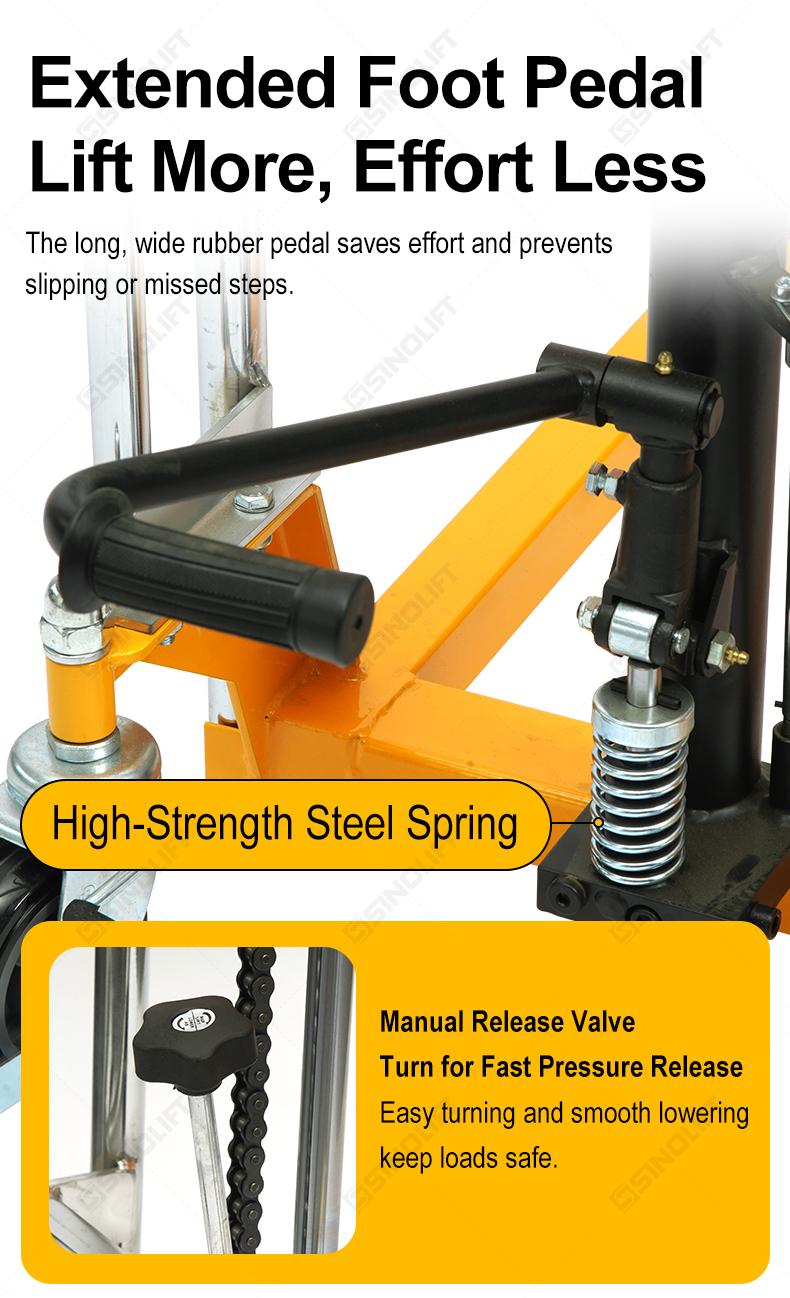
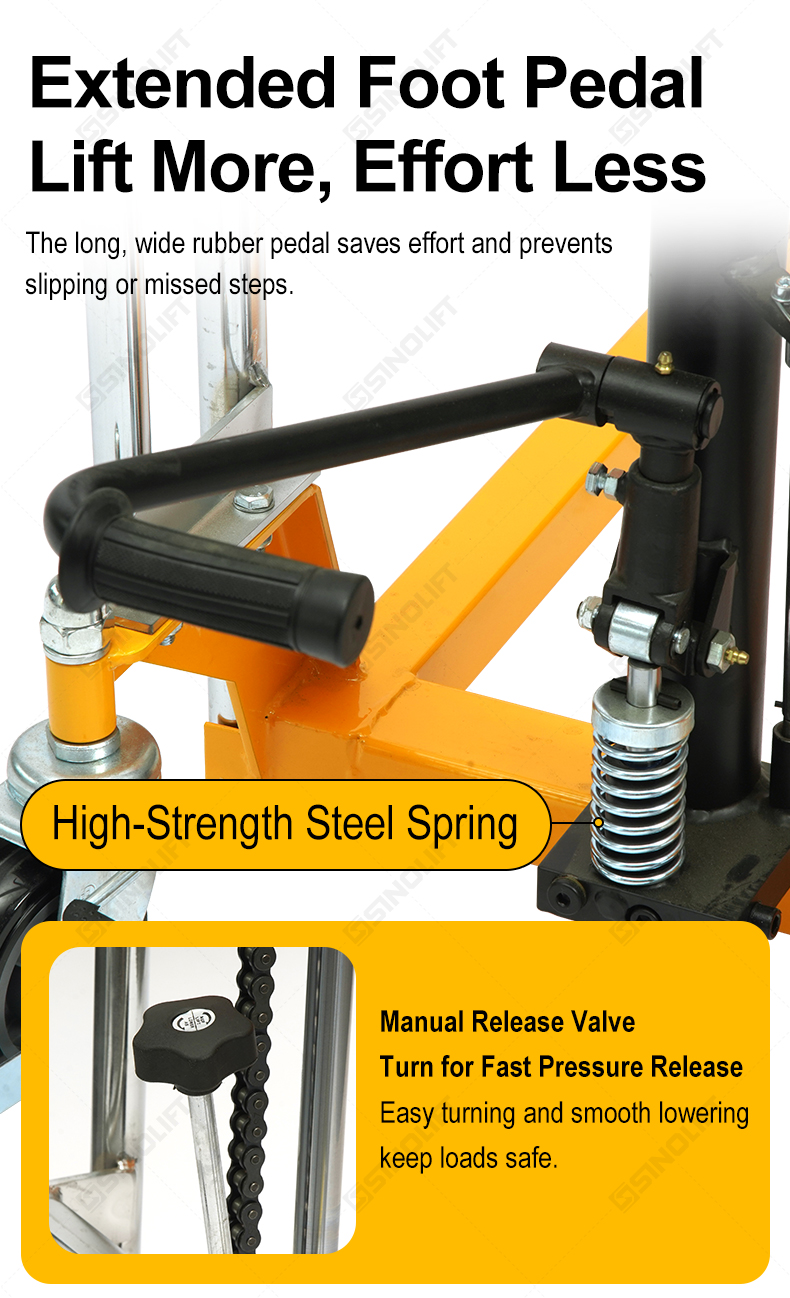
The extended foot pedal allows the operator to lift the load smoothly without relying on a battery or power supply.
Stable and Durable Structure
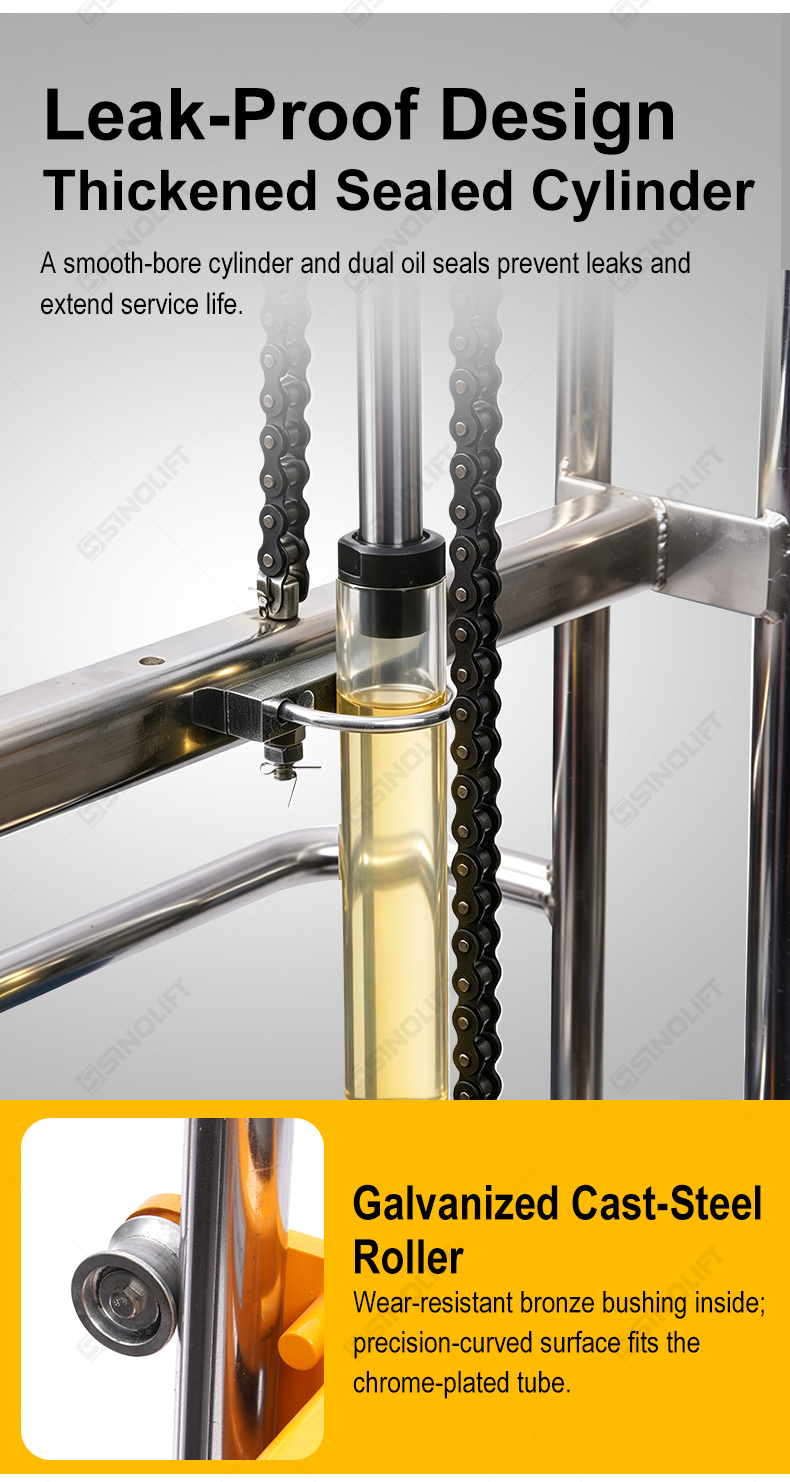
A chrome-plated mast, reinforced chain and sealed hydraulic cylinder support smooth lifting with minimal sway.
Easy Maneuvering and Positioning
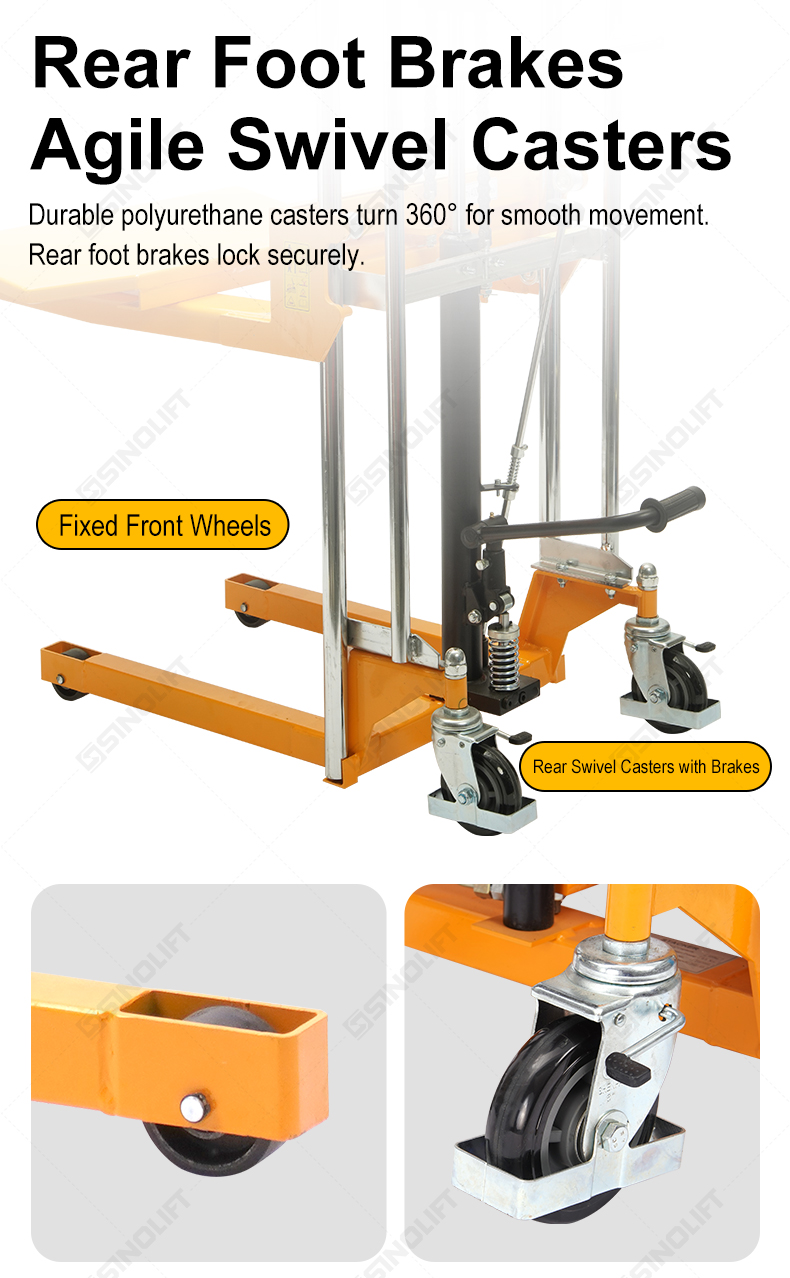
Fixed front wheels, swivel rear casters and foot-operated brakes make the stacker easy to move and secure in position.
Suitable Applications
The PV Manual Roll Handling Stacker is suitable for handling cylindrical materials in:
- Film and flexible packaging plants
- Printing and converting facilities
- Paper processing operations
- Plastic film production
- Textile and nonwoven manufacturing
- Warehouses and production workshops
- Roll loading and unloading stations
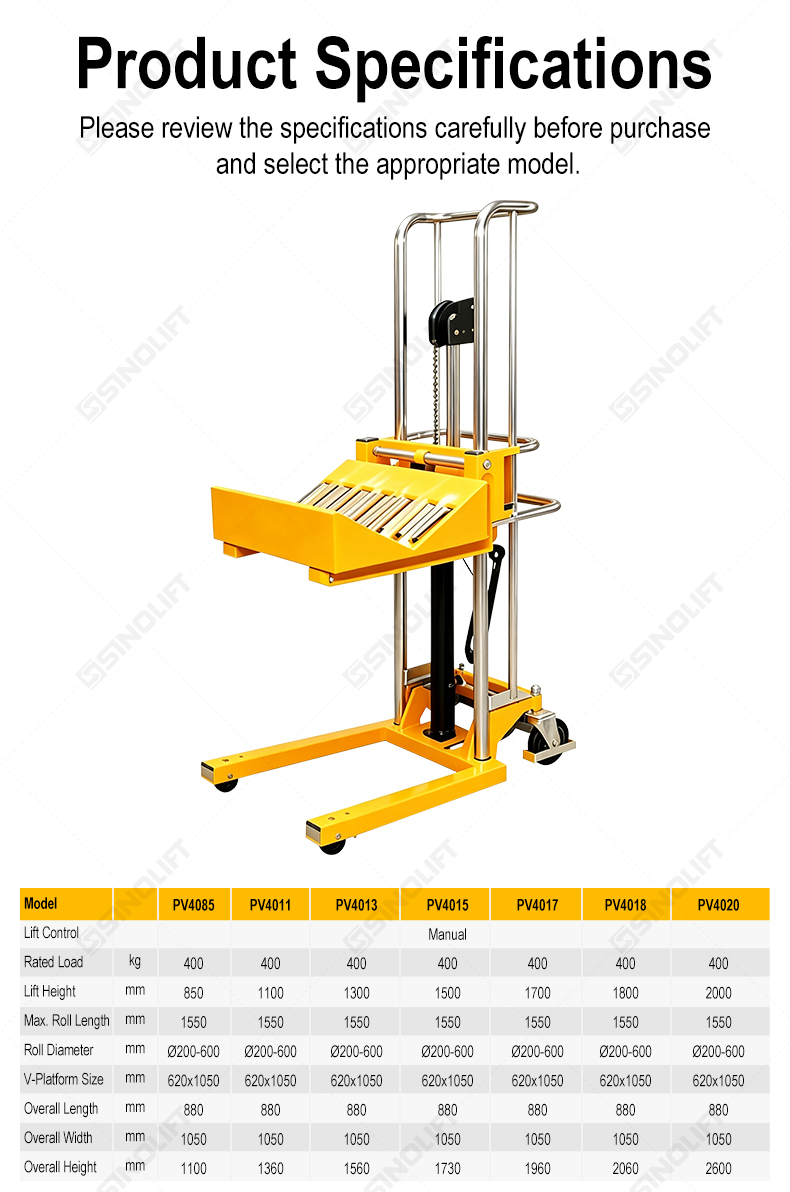
| Model No. | PV4085 | PV4011 | PV4013 | PV4015 | PV4017 | PV4018 | PV4020 | |
| Operation | Manual | |||||||
| Load capacity | (kg) | 400 | 400 | 400 | 400 | 400 | 400 | 400 |
| Lifting Height | (mm) | 850 | 1100 | 1300 | 1500 | 1700 | 1800 | 2000 |
| Max.width of reel/roll | (mm) | 1550 | 1550 | 1550 | 1550 | 1550 | 1550 | 1550 |
| Min.- Max.diameter of reel/roll | (mm) | Ø200-600 | Ø200-600 | Ø200-600 | Ø200-600 | Ø200-600 | Ø200-600 | Ø200-600 |
| Reel V-Tray Wdith x Length | (mm) | 620x1050 | 620x1050 | 620x1050 | 620x1050 | 620x1050 | 620x1050 | 620x1050 |
| Overall Length | (mm) | 880 | 880 | 880 | 880 | 880 | 880 | 880 |
| Overall Wdith | (mm) | 1050 | 1050 | 1050 | 1050 | 1050 | 1050 | 1050 |
| Overall Height | (mm) | 1100 | 1360 | 1560 | 1730 | 1960 | 2060 | 2600 |
FAQ
1. What types of materials can the PV Manual Roll Handling Stacker handle?
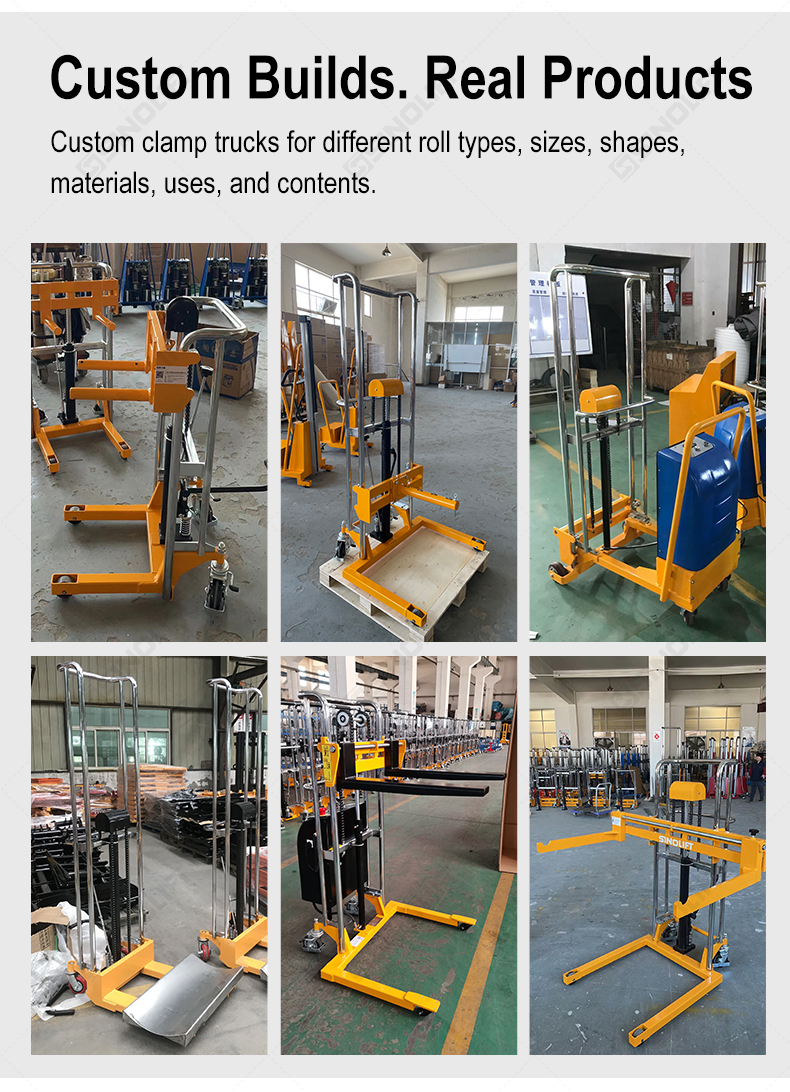
It is designed for film rolls, paper rolls, cylindrical stock, drums and other round materials that are difficult to handle safely by hand. The V-shaped platform can be customized to match the diameter, length, surface material and handling requirements of the load.
2. What information is required to customize the stacker?
Please provide the roll weight, diameter, length, material and required lifting height. We also recommend sharing information about the loading direction, working aisle, floor conditions and the machine or production line where the roll will be positioned.
3. How does the manual hydraulic lifting system work?
The operator raises the platform by pressing the extended foot pedal, with an approximate lifting travel of 20 mm per stroke. To lower the load, the operator turns the manual release valve, allowing the platform to descend smoothly and in a controlled manner.
4. How does the stacker keep cylindrical loads stable?
The V-shaped platform supports the roll from both sides and helps keep it centered during lifting and movement. For safe operation, the load should be positioned evenly, remain within the rated capacity and be handled on a firm, level floor.
5. Can the lift height and platform size be customized?
Yes. The lift height, V-platform dimensions, roller spacing, mast structure, wheel arrangement and overall machine size can be adapted to the application. Final dimensions should be confirmed through the load specifications, operating requirements and an approved technical drawing before production.